


Rotary nickel-titanium (NiTi) instrumentation has transformed root canal preparation. Compared with stainless-steel instruments, NiTi files offer greater flexibility, superelasticity and improved ability to maintain canal curvature. However, instrument separation remains one of the most important complications of mechanical root canal preparation.
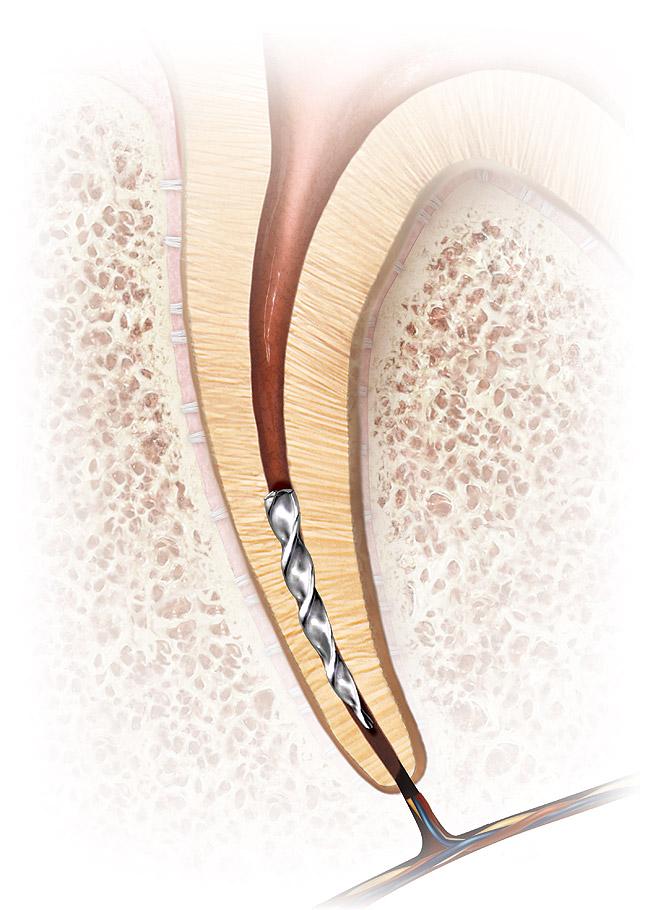
For an endodontic student, understanding why a rotary file fractures is much more important than simply memorising that “torsional fatigue and cyclic fatigue” are the causes.
A file does not usually break randomly.
It breaks because mechanical stresses accumulate beyond what the instrument can tolerate.
Understanding where those stresses come from—canal anatomy, file design, glide path, apical pressure, torque, rotational speed, instrumentation technique, irrigation, reuse and metallurgical properties—allows the clinician to reduce the risk of separation.

What Is Rotary File Fracture?
Rotary file fracture, also called instrument separation, is the intracanal fracture of an endodontic instrument during root canal instrumentation.
The fractured segment may remain inside the canal and can potentially interfere with subsequent cleaning, shaping and disinfection.
The reported incidence of fractured endodontic instruments varies considerably among studies. The American Association of Endodontists notes reported fracture frequencies of approximately 0.7–6%, while a systematic review examining intracanal NiTi instrument fractures reported an overall fracture incidence of about 5% in the included studies.
Importantly, file separation is not necessarily evidence of poor treatment. Modern NiTi instruments can fracture unexpectedly, sometimes without obvious visual signs of previous deformation.
The goal, therefore, is not to achieve a “zero fracture” environment—which is impossible—but to understand and minimise the factors that increase fracture risk.
The Two Major Mechanisms of Rotary File Fracture
Most discussions of NiTi instrument separation can be simplified into two major mechanisms:
1. Torsional fracture
2. Cyclic fatigue fracture
A third concept increasingly discussed in contemporary literature is torsional fatigue, where repeated torsional loading contributes to progressive damage before final fracture.


1. Torsional Fracture
What happens?
Imagine the tip of your rotary file becomes tightly locked inside a narrow portion of the canal.
The motor, however, continues rotating the shaft.
Now there is a conflict:
Tip = stationary
Shank = rotating
This creates torsional stress along the instrument.
If the torque exceeds the elastic limit or torsional strength of the instrument, the file fractures.
Simple way to remember:
The tip stops, but the file keeps turning → torsional fracture.
The AAE describes torsional fracture as occurring when the instrument tip locks in the canal while the shaft continues to rotate.
What increases torsional stress?
1. Excessive apical pressure
One of the most common mistakes made by beginners is forcing the rotary file apically.
When excessive pressure is applied:
- the file penetrates too aggressively;
- the tip may bind;
- dentinal engagement increases;
- torque rises;
- the motor continues to rotate;
- fracture may occur.
Clinical principle:
Do not force the file to the apex.
A rotary instrument should cut and progress through the canal, rather than being pushed aggressively through it.
2. Cyclic Fatigue Fracture
Cyclic fatigue is particularly important in curved canals.
When a rotary file rotates inside a curved canal, the instrument repeatedly bends around the curvature.
One side of the instrument experiences tension, while the opposite side experiences compression.
With every rotation, this process is repeated.
Eventually:
Repeated bending → microscopic damage → crack initiation → crack propagation → fracture
This is called cyclic fatigue or flexural fatigue.
A useful mental picture is:
Paper clip experiment
Bend a paper clip back and forth repeatedly.
It may survive the first few bends.
But after repeated bending at the same point, it eventually breaks.
A rotary NiTi file behaves according to the same fundamental fatigue principle, although its metallurgical behaviour is much more complex.
The AAE describes cyclic fatigue as repeated extension and compression of the metal during rotation around a canal curvature, ultimately resulting in work hardening and fracture.
Torsional vs Cyclic Fatigue
| Feature | Torsional fracture | Cyclic fatigue |
|---|---|---|
| Main problem | Excessive twisting | Repeated bending |
| Typical situation | Narrow/constricted canal | Curved canal |
| Tip | Often binds | May continue rotating |
| Main stress | Torsional | Flexural |
| Major risk | Apical binding | Canal curvature |
| Typical prevention | Reduce binding and apical pressure | Reduce repeated flexure |
| Common location | Often near the tip | Often at the point of maximum curvature |
| Warning signs | Binding, excessive resistance | Often no obvious warning |
| Can occur suddenly? | Yes | Yes |
A systematic review found that flexural failure was the predominant fracture mechanism for rotary NiTi instruments, accounting for approximately 62–92% of fractures in the studies reviewed.
Why Do Rotary Files Actually Break?
The following factors are particularly important for students to understand.
1. Severe Canal Curvature
The more severe the curvature, the greater the bending stress experienced by the instrument.
But there is an important concept here:
Angle of curvature is not the whole story.
The radius of curvature is extremely important.
A canal with a sharp, short-radius curvature creates a more demanding mechanical environment than a canal with a broad, gradual curve.
Therefore:
Sharp curve + small radius → greater flexural stress → increased cyclic fatigue
The risk becomes even greater when the file repeatedly rotates at the same point of maximum curvature.
2. Failure to Establish a Glide Path
This is one of the most important concepts for students.
A glide path is a smooth, reproducible pathway from the canal orifice toward the working length that allows subsequent shaping instruments to progress safely.
Without an adequate glide path:
- the rotary file encounters unexpected resistance;
- the tip may bind;
- torsional stress increases;
- the instrument may be forced apically;
- the file experiences greater cyclic and torsional loading.
The AAE specifically notes that inadequate glide path preparation can increase both torsional and cyclic stresses on rotary and reciprocating instruments.
Student rule:
Do not ask the rotary file to create a pathway that you have not established.
A rotary instrument should primarily shape an established pathway, not be used as a substitute for negotiating a difficult canal.
3. Excessive Apical Pressure
The phrase to remember is:
“Let the file do the work.”
When students apply excessive apical pressure, the instrument is more likely to:
- bind;
- lock;
- experience increased torque;
- undergo greater torsional deformation;
- fracture.
Instead of forcing the instrument:
Advance → cut → withdraw → clean → irrigate → recapitulate → continue
The exact motion should always follow the manufacturer’s instructions for the particular file system.
4. Incorrect Speed and Torque Settings
Every rotary system has a recommended speed and torque range.
Using inappropriate motor settings can alter the mechanical stresses experienced by the file.
High rotational speed may increase the number of bending cycles experienced by the instrument over a given period.
Excessive torque can increase torsional loading.
Therefore:
Never assume that one motor setting is suitable for every NiTi system.
Always consult the manufacturer’s instructions for:
- rotational speed;
- torque;
- recommended motion;
- sequence;
- file usage;
- irrigation requirements.
5. Using the Wrong File Size in the Wrong Canal
A larger file is not automatically a better file.
Increasing file diameter and taper generally increases the instrument’s stiffness and changes its mechanical behaviour.
Larger and higher-taper instruments may be particularly vulnerable to cyclic fatigue in curved canals because they undergo greater bending stress.
The AAE notes that higher taper and larger file dimensions can reduce cyclic-fatigue resistance, although increased cross-sectional mass can improve resistance to torsional loading.
This illustrates an important principle:
There is no single “best” mechanical property in a NiTi file.
Flexibility, cutting efficiency, torsional resistance and fatigue resistance must be balanced.
6. Inadequate Irrigation and Lubrication
Instrumentation should never be considered independently from irrigation.
A poorly irrigated canal can increase friction and debris accumulation.
Adequate irrigation helps:
- flush debris;
- reduce friction;
- facilitate file movement;
- improve canal cleanliness;
- prevent accumulation of dentinal debris around the instrument.
However, irrigation does not eliminate the mechanical causes of file separation.
It should be considered one component of a complete instrumentation strategy.
7. Canal Calcification
Calcified canals present a particularly challenging environment.
A calcified canal may have:
- reduced diameter;
- irregular anatomy;
- abrupt constrictions;
- difficult negotiation;
- increased friction;
- increased likelihood of file binding.
Trying to introduce a rotary file into a canal that has not been adequately negotiated can dramatically increase torsional loading.
The safer approach:
Scout → negotiate → establish patency/glide path → confirm working length → shape
rather than:
Find canal → immediately introduce rotary file
8. Repeated Use of the Same Instrument
Repeated use exposes the instrument to repeated mechanical loading.
Even if a file appears normal to the naked eye, microscopic defects may accumulate.
This is especially relevant because NiTi files can fracture without obvious visible deformation.
Therefore, visual inspection alone cannot guarantee that an instrument is mechanically safe.
The number of uses should follow the manufacturer’s recommendations and the clinical circumstances, particularly for complex, curved or calcified canals.
9. Reusing a File After Severe Canal Stress
Not all clinical uses are mechanically equivalent.
A file used in:
- a straight, wide canal
does not necessarily experience the same stress as one used in:
- a severely curved mesiobuccal canal;
- a calcified canal;
- a narrow premolar canal;
- a double-curved canal.
Therefore, counting only the number of previous uses may not adequately describe the instrument’s fatigue history.
The severity of the case matters.
10. Stopping the File Inside the Curvature
This is an important clinical error.
When a continuously rotating instrument is left stationary at a curved portion of the canal, the same region of the file remains subjected to repeated flexural stress.
The file should be used with controlled movement according to the manufacturer’s recommended technique.
The AAE specifically advises maintaining appropriate movement rather than stopping the rotary instrument midway through the canal.
Think:
Moving file → distributed stress
Stationary rotating file → concentrated stress
11. Incorrect Pecking Motion
Pecking motion is not simply “moving the file up and down.”
It should be:
- controlled;
- gentle;
- limited in amplitude;
- consistent with the particular file system.
Aggressive or excessively deep pecking may cause:
- increased dentinal engagement;
- binding;
- excessive torque;
- increased stress on the instrument.
The appropriate amplitude and technique vary between systems, so students should follow the specific manufacturer’s protocol.
12. Incorrect File Sequence
A rotary sequence is designed for a reason.
Using a large finishing file too early may expose the instrument to unnecessary stress.
A logical sequence progressively prepares the canal and reduces the amount of dentin that the next instrument needs to remove.
Poor sequence:
Large file → forced apically → binding → high torque → separation
Controlled sequence:
Negotiation → glide path → progressive enlargement → irrigation → shaping
13. Inadequate Coronal Preflaring
Coronal interferences can make apical instrumentation more difficult.
If the coronal portion of the canal remains restrictive, the rotary instrument may experience unnecessary bending and friction before reaching the apical third.
Appropriate coronal enlargement can improve:
- straight-line access;
- instrument progression;
- debris removal;
- irrigation penetration;
- control of apical instrumentation.
But again, excessive dentin removal should be avoided.
14. Poor Access Cavity Design
A compromised access cavity can increase instrument stress.
If the file enters the canal at an unfavorable angle, the instrument may experience:
- increased bending;
- coronal interference;
- lateral pressure;
- unnecessary curvature before reaching the canal’s natural pathway.
Therefore:
Good access is part of fracture prevention.
Straight-line access does not mean unnecessarily removing tooth structure. It means creating an access that permits controlled instrumentation while respecting the remaining tooth structure.
15. Complex Canal Anatomy
Some canals are mechanically difficult even for experienced clinicians.
Examples include:
- severe curvatures;
- abrupt apical curves;
- S-shaped canals;
- double curvatures;
- ribbon-shaped canals;
- narrow canals;
- calcified canals;
- merging canals;
- bifurcating canals.
In these cases, the risk of instrument separation increases because the file may experience multiple areas of flexural and torsional stress.
Always study the preoperative radiograph.
Ask:
Where does the canal curve?
How sharp is the curve?
Is there a second curve?
Is the canal narrow or calcified?
Where is the likely point of maximum stress?
This mental mapping should occur before instrumentation begins.
16. Instrument Design and Metallurgy
Not every NiTi file behaves identically.
Modern systems differ in:
- alloy;
- heat treatment;
- cross-sectional design;
- taper;
- tip design;
- flute geometry;
- helical angle;
- pitch;
- core diameter;
- surface treatment;
- manufacturing process.
Heat-treated NiTi instruments can demonstrate improved cyclic-fatigue resistance compared with conventional NiTi instruments, although mechanical performance remains system-specific.
Modern metallurgy has therefore shifted from simply asking:
“Is it NiTi?”
to asking:
“What type of NiTi, with what heat treatment and design?”
17. Cross-Sectional Design
The cross-sectional geometry affects the instrument’s mechanical behaviour.
A larger core generally increases stiffness and can improve resistance to torsional loading.
A reduced core may increase flexibility and improve performance in curved canals.
The AAE describes cross-sectional mass as an important determinant of stiffness and notes the trade-off between torsional and cyclic-fatigue resistance.
Therefore:
More metal ≠ automatically better.
More flexibility ≠ automatically safer.
The ideal instrument depends on the clinical situation.
18. Rotational Speed
Rotational speed influences the number of bending cycles experienced by a file.
A higher rotational speed means the instrument can complete more cycles of rotation in a given period.
Experimental studies have demonstrated that time to failure can decrease as rotational speed and curvature increase under cyclic-fatigue conditions.
However, students should not simply conclude that “lower speed is always safer.”
The correct speed depends on:
- instrument design;
- alloy;
- manufacturer’s instructions;
- motor;
- canal anatomy;
- instrumentation technique.
19. Kinematics: Continuous Rotation vs Reciprocation
The movement pattern of an instrument affects its fatigue behaviour.
Continuous rotation repeatedly bends the instrument in the same direction as it passes through a curved canal.
Reciprocation alternates rotational direction.
Several laboratory studies and systematic reviews have found improved cyclic-fatigue resistance with reciprocating motion under many testing conditions.
But remember:
Reciprocation does not make an instrument unbreakable.
Torsional loading, canal anatomy, file design and operator technique still matter.
20. Manufacturing Defects and Surface Irregularities
Although modern manufacturing techniques have substantially improved NiTi instruments, microscopic surface irregularities can act as sites for stress concentration.
Repeated mechanical loading may promote crack initiation and propagation.
This is one reason why:
- instrument inspection;
- appropriate handling;
- avoiding damaged instruments;
- following manufacturer’s reuse recommendations
are important.
How Does a File Actually Break?
Think of file fracture as a sequence.
Stage 1 — Stress
The instrument encounters mechanical loading.
↓
Stage 2 — Stress concentration
A specific region experiences disproportionately high stress.
↓
Stage 3 — Microdamage
Repeated loading produces microscopic structural damage.
↓
Stage 4 — Crack initiation
A microscopic crack develops.
↓
Stage 5 — Crack propagation
Repeated loading causes the crack to grow.
↓
Stage 6 — Catastrophic fracture
The remaining cross-sectional area can no longer withstand the applied load.
↓
FILE SEPARATION
This is why fracture can appear sudden even though the mechanical damage may have developed progressively.
Can You Predict a File Fracture?
Sometimes—but not always.
A file may show visible signs such as:
- unwinding;
- distortion;
- flute deformation;
- bending;
- surface damage.
If such changes are noticed, the instrument should generally be discarded.
However, NiTi files can fracture without obvious visual warning.
This is one of the most important lessons for students:
“The file looked normal” does not mean “the file was mechanically unaffected.”
Why Does a File Break More Easily in a Curved Canal?
Consider what happens to a rotating file inside a curved canal.
At the point of maximum curvature:
Outer surface → tension
Inner surface → compression
As the file rotates:
tension → compression → tension → compression
This repeated loading creates cyclic fatigue.
Therefore:
Greater curvature
↓
Greater bending
↓
Greater flexural stress
↓
Faster fatigue accumulation
↓
Higher fracture risk
The systematic-review evidence supports flexural fatigue as a major mechanism of rotary NiTi separation.
A Simple Clinical Example
Imagine a mandibular molar with a severely curved mesial canal.
A student:
- Obtains access.
- Locates the canal.
- Uses a small hand file.
- Does not establish a reproducible glide path.
- Takes a rotary file directly into the canal.
- Applies apical pressure.
- The file reaches the curvature.
- The file binds.
- The motor continues rotating.
- The student continues pushing apically.
Two mechanisms can now occur simultaneously:
Torsional loading
because the file tip binds.
Cyclic fatigue
because the instrument repeatedly bends around the curvature.
Eventually:
The file separates.
This is why fracture mechanisms should not be considered completely isolated phenomena. Clinically, an instrument can experience combined torsional and flexural stresses.
How Can Students Prevent Rotary File Fracture?
The “SAFE FILE” approach
S — Study the anatomy
Analyse the preoperative radiograph.
Look for:
- curvature;
- calcification;
- narrow canals;
- abrupt bends;
- multiple canals;
- complex anatomy.
A — Achieve a glide path
Establish a smooth and reproducible pathway before using shaping instruments.
F — Follow the manufacturer’s protocol
Use the recommended:
- speed;
- torque;
- sequence;
- motion;
- irrigation;
- file-use recommendations.
E — Eliminate excessive pressure
Never force the file apically.
F — Frequently clean and inspect
Remove debris from flutes and inspect the instrument for visible deformation or damage.
I — Irrigate generously
Maintain adequate irrigation throughout instrumentation.
L — Limit unnecessary reuse
Follow the manufacturer’s recommendations and consider the complexity of the cases in which the instrument has already been used.
E — Exit and re-enter deliberately
Do not leave a rotating file stationary in a curved canal. Use controlled movements appropriate to the system.
10 Golden Rules for Endodontic Students
1. Never force a rotary file.
2. Never skip the glide path in a difficult canal.
3. Never ignore canal curvature.
4. Never use arbitrary speed and torque settings.
5. Never continue using a visibly damaged file.
6. Never assume NiTi files are fracture-proof.
7. Always irrigate adequately.
8. Always follow the manufacturer’s sequence.
9. Always inspect the file after use.
10. Remember that technique matters as much as technology.
Torsional Failure: The One-Line Concept
File tip binds + shaft keeps rotating = torsional fracture.
Cyclic Fatigue: The One-Line Concept
Repeated bending in a curved canal = cyclic fatigue fracture.
And the most important combined concept:
A file can be subjected to both mechanisms during the same procedure.
What Should You Do When a File Fractures?
First:
Do not panic.
Instrument separation is a recognised complication of endodontic treatment.
The presence of a separated instrument does not automatically mean that the tooth will fail.
Management depends on:
- location of the fragment;
- stage of instrumentation;
- canal anatomy;
- degree of infection;
- presence of periapical disease;
- fragment accessibility;
- remaining dentin;
- operator skill.
Options may include:
Retrieval
Removing the separated fragment when it can be done safely.
Bypassing
Attempting to negotiate alongside the fragment.
Retention
Leaving the fragment in place when removal would create greater risk.
Referral
Referral to an experienced endodontist may be the safest option in difficult cases.
The AAE emphasises that aggressive retrieval attempts can themselves cause complications such as perforation, root damage or unnecessary removal of dentin.
Therefore:
The objective is not simply to remove the broken file. The objective is to preserve the tooth and maintain effective disinfection.
The Most Important Exam Point
If an examiner asks:
“What are the causes of rotary NiTi file fracture?”
Start with:
1. Cyclic/flexural fatigue
Repeated tension-compression cycles when the file rotates in a curved canal.
2. Torsional overload
The file tip binds while the shaft continues to rotate.
Then expand into:
- severe canal curvature;
- small radius of curvature;
- inadequate glide path;
- excessive apical pressure;
- incorrect speed;
- excessive torque;
- inappropriate file size/taper;
- inadequate coronal enlargement;
- calcified/narrow canals;
- improper pecking motion;
- prolonged rotation at one point;
- inadequate irrigation/lubrication;
- repeated instrument use;
- manufacturing/surface defects;
- inappropriate instrumentation sequence;
- operator-related errors.
Frequently Asked Questions
Is cyclic fatigue the same as torsional fatigue?
No.
Cyclic fatigue primarily refers to repeated flexural loading during rotation around a curvature.
Torsional failure occurs when twisting stress exceeds the instrument’s torsional strength, typically after binding.
The terms are sometimes discussed together because clinical instrument separation may involve combined stresses.
Are larger NiTi files more likely to fracture?
It depends on the type of loading.
Larger instruments may have greater resistance to torsional loading because of their increased cross-sectional mass, but larger diameter/taper can reduce flexibility and increase susceptibility to cyclic fatigue in curved canals.
Can a brand-new NiTi file fracture?
Yes.
A new file has not accumulated previous clinical use, but fracture can still occur because of:
- severe curvature;
- torsional overload;
- binding;
- inappropriate technique;
- excessive stress;
- manufacturing factors.
Therefore, single use reduces risk but does not eliminate fracture.
Does single-use eliminate file separation?
No.
Single use substantially reduces the contribution of accumulated fatigue from previous cases, but it cannot eliminate stress generated during the current procedure.
Is reciprocation completely safe?
No.
Reciprocation may improve resistance to cyclic fatigue under many experimental conditions, but it does not eliminate torsional stress or the possibility of instrument separation.
Can you see cyclic fatigue before fracture?
Not reliably.
Unlike some stainless-steel instruments, NiTi files may fracture without obvious visual deformation.
Key Take-Home Message
Rotary file fracture is not simply a “bad file” problem.
It is the result of an interaction between:
File metallurgy
Instrument design
Canal anatomy
Instrumentation technique
Mechanical loading
Operator behaviour
The two fundamental mechanisms are:
TORSIONAL OVERLOAD
Tip binds → shaft rotates → torque increases → fracture
and
CYCLIC FATIGUE
Repeated bending → tension/compression cycles → microcracks → fracture
Modern NiTi metallurgy, heat treatments and instrument designs have substantially improved mechanical performance, but no rotary instrument is fracture-proof.
For students, the most valuable lesson is therefore simple:
Respect the anatomy, establish a glide path, control the file, follow the manufacturer’s protocol, and never force NiTi instrumentation.
Good endodontic instrumentation is not about making the file work harder.
It is about making the file work within its mechanical limits.
📌 Quick Revision Box
| Remember | Key point |
|---|---|
| Torsional fracture | Tip binds while shaft rotates |
| Cyclic fatigue | Repeated bending in a curved canal |
| Major risk for cyclic fatigue | Severe curvature/small radius |
| Major risk for torsional fracture | Binding + excessive torque |
| Important preventive step | Establish a glide path |
| Important operator error | Excessive apical pressure |
| Important instrument factor | Alloy, heat treatment and design |
| Can fracture occur without warning? | Yes |
| Does single use eliminate fracture? | No |
| Is reciprocation fracture-proof? | No |
| Best prevention | Anatomy + technique + appropriate instrument selection |

Leave a comment